What is bio art? It is an art practice in which artists work with live tissues, bacteria, other living organisms and life processes. For a first look, start with bacteria-based works, which have the clearest documented record of artist, year and organism.
Bio art sits within the wider field of contemporary art and environment. Readers comparing it with land-based practice can start with what is environmental art, and the longer lineage of art about ecology is traced in ecological art history.
What bio art means and where the term comes from
Bio art is a contemporary art form that applies scientific methods and technology to explore living systems as artistic subjects, according to Lab Manager’s introduction to bioart. A teaching presentation on biology and art puts the same idea plainly: the artist works with live tissues, bacteria, living organisms and life processes. The defining feature is the material. In a bio art work the medium is alive, or was alive when the work was made.
The term itself is credited to Eduardo Kac. Amherst STEM Network reports that Kac, a Brazilian-American artist and professor, first adopted “BioArt” as an artistic practice in 1997. The practice has older roots.
The range is wide. Lab Manager describes bioart as stretching from bacterial manipulation to glowing rabbits and cellular sculptures. That breadth is why this article sorts the field by living material rather than by style.
How to choose where to start
No ranking is implied below. The materials are ordered by how much documented evidence supports each one, and the criteria are listed here so readers can reorder them for their own interests.
- Documented record: a named artist, a year and an organism make a work easy to verify and to look up in a museum or archive.
- Type of living material: bacteria, cells, fungi and whole animals raise different practical and ethical questions.
- Setting: some works need a laboratory, while others can be displayed once the organism has been treated.
- Risk: works that involve live cultures, antibiotic resistance or release into the environment call for closer attention to the safety questions covered further down.
Four living materials used in bio art
Bacteria
Bacteria are the best entry point because several named works are recorded. In 1986, according to Lab Manager, Joe Davis worked with geneticist Dan Boyd to encode a symbol for life and femininity into an E. coli bacterium. The result, Microvenus, treats a living microbe as a carrier of an artwork. It suits readers who want a clear, citable example of genetic material used as an art medium.
A later example is the MRSA Quilt of 2011. A presentation on bioart lists its materials as embroidery silk, cotton calico, MRSA bacteria and antibiotics. It suits readers interested in how bacteria art can address health themes through familiar craft materials. Its limit is that the same material that gives the piece meaning also demands careful handling.
Cells and tissue culture
Tissue culture grows living cells outside the body, and artists have used it to make cellular sculptures. Lab Manager reports that the Tissue Culture & Art Project, initiated in 1996 by Oron Catts and Ionat Zurr, is part of this tradition. The source text spells the first name “Oran”, and the artists are better known as a duo. It suits readers drawn to the idea that sculpture can be grown rather than carved.
The main limitation is access. Cell work depends on laboratory equipment and trained handling, so it is rarely something a visitor can approach closely, and viewing usually means a gallery presentation or documentation.
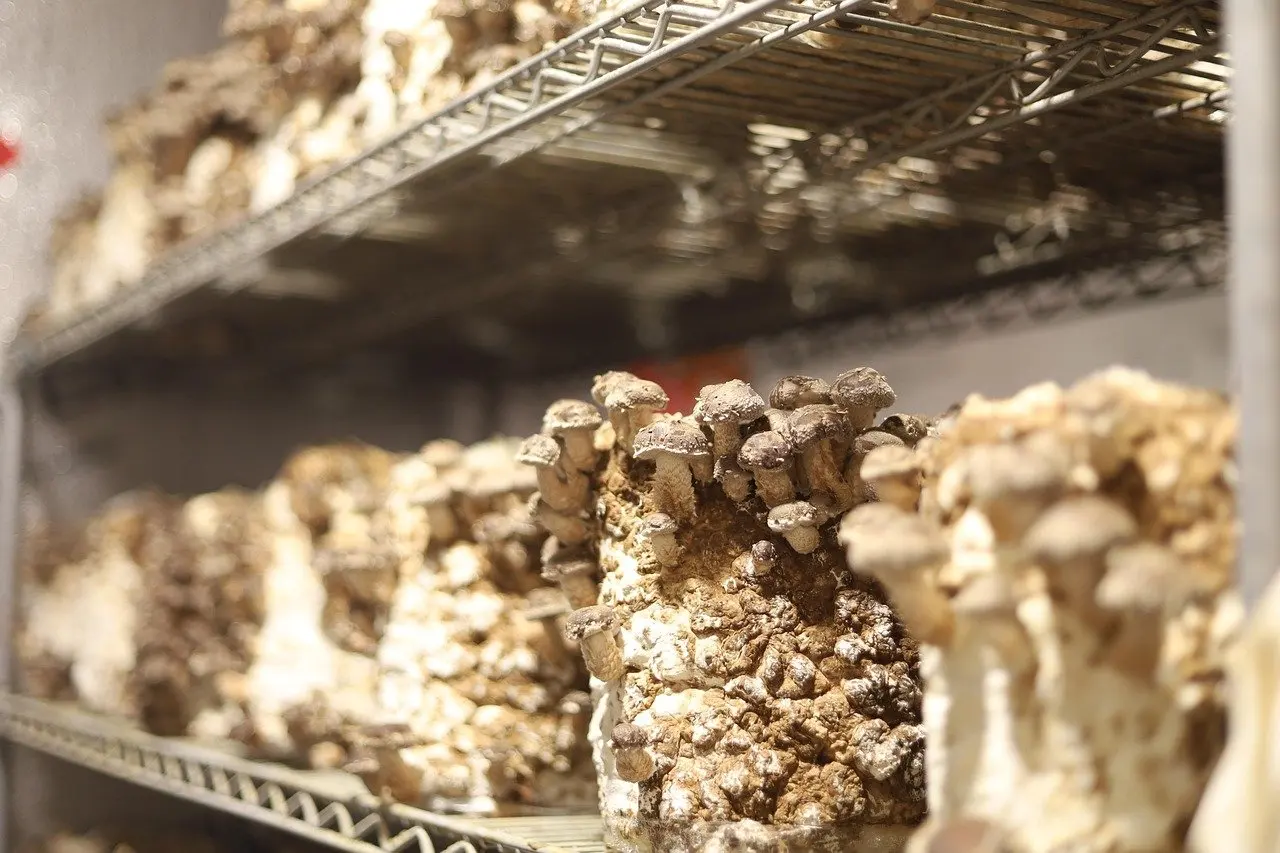
Fungi
Fungi enter the history of bio art through accident. Lab Manager recounts that in 1928 Fleming noticed parts of his germ paintings had been killed by a fungus, penicillin. The episode shows an organism changing a living artwork without the artist’s intent. Anyone exploring mycelium sculpture can use it as a reminder to look for works where the artist, year and organism are all documented, as the earlier examples are.
Whole organisms and animals
The most visible and most debated works use whole animals. Lab Manager lists glowing rabbits among the best-known examples. Hans Haacke’s Ten Turtles Set Free shows the other side. The artist inadvertently released the wrong subspecies in France, which compromised genetic lineages. This category suits readers interested in ethics, since the consequences of mistakes reach beyond the gallery.
Comparing the documented examples
| Living material | Documented example | Year | Planning use |
|---|---|---|---|
| Bacteria (E. coli) | Microvenus by Joe Davis and Dan Boyd | 1986 | Best first example for understanding genetic material as an art medium. |
| Cells (tissue culture) | Tissue Culture & Art Project by Oron Catts and Ionat Zurr | 1996 | Suits readers interested in grown, cellular sculpture. |
| Bacteria (MRSA) with antibiotics | MRSA Quilt | 2011 | Shows how bacteria and craft materials combine in one work. |
| Fungus (penicillin) | Fleming’s germ paintings | 1928 | Useful historical background rather than a gallery work to visit. |
The examples and dates come from Lab Manager and a presentation on biology and art.
Ethics, biosafety and the care of living work
Bio art carries real concerns. In the Lab Manager introduction, Yetisen notes a lot of ethical and safety concerns around bioart, including the risk of releasing invasive species into the environment. Haacke’s wrong-subspecies release shows how a well-meant gesture can damage the genetic lineages it was meant to respect.
The supplied evidence documents these concerns but does not set out a single rulebook. The practical direction is therefore to treat biosafety as a condition of the work, not an afterthought. Artists and venues should check the biosafety and ethics guidance of the host laboratory or institution before any live work is made or shown, and avoid any plan that lets an organism leave a controlled space. Visitors can read the wall text or catalogue to see whether a work is live, treated or documented.
Where to see bio art
Bio art is usually shown in science-and-art galleries and museums rather than in conventional art spaces. The presentation on bioart records that The Antibiotic Resistance Quilt was installed in the In Case of Emergency exhibition at Science Gallery Dublin. The same source records that Ex Voto, a set of votives hung on ribbons, was shown at the Museum of the History of Science in Oxford from 28 Sep 2017 to 18 Mar 2018. Both are past displays, so current programmes should be checked before planning a visit.
Works with living or recently living material are rarely on permanent display. Searching a venue’s current exhibition list is the most reliable way to find living art installations, and documentation online can fill the gaps for works that have closed.
Frequently asked questions
Is bio art always made in a laboratory?
Not always, but most of it draws on laboratory techniques. Amherst STEM Network says most BioArt comes from everyday experiments that use biotechnology such as MRI, gel electrophoresis and crystallography. That is why venues and artists tie it so closely to biosafety guidance.
Can the artist’s own body be part of bio art?
Yes. According to Amherst STEM Network, Eduardo Kac implanted a microchip into his left ankle in the 1997 performance Time Capsule. In 2007 the performance artist Stelarc permanently integrated a synthetic ear into one of his arms.
Does a bio art work have to contain live organisms?
No. Ex Voto used votives stained or dyed with sterilised bacteria, so a work can carry the mark of bacteria without live cultures. This is one reason the wall text matters when you visit an exhibition.