| Effect of the Anthropocene idea | What it changes in art | Planning use |
|---|---|---|
| Speed of change | Geological epochs are known as products of slow change, while the Anthropocene is characterised by speed. | Look for works that treat urgency and acceleration as subject matter rather than slow background. |
| Human impact | Human impact is described as having a profound and disastrous effect on the Earth. | Expect works that name causes and consequences instead of idealised scenery. |
| Named drivers | Runaway climate change, rising water, surging population, non-stop extinction and expanding technologies. | Use these drivers as entry points when choosing exhibitions or reading. |
| Artistic stance | Artists challenge human mastery over nature and upend the status quo. | Read a work as an argument about power and responsibility, not only as a view. |
| Scientific status | One publisher frames the Anthropocene as an affective rather than a scientific fact. | Treat the term as a lens, and check how each show or text defines it. |
The wording and figures in this table come from the e-flux announcement for The World to Come and the Open Humanities Press listing for Art in the Anthropocene.
Art in the Anthropocene responds to a proposed geological epoch shaped by human impact, so the term works best as a contested lens rather than a settled scientific label.
This page is part of the wider guide to contemporary art and environment. It starts with what the idea changes for artists and viewers, then returns to the geology behind it.
How the Anthropocene changes what artists make
Anthropocene contemporary art takes human impact as its starting point. The exhibition announcement for The World to Come says its artists respond by upending the status quo and challenging human mastery over nature. That is a different task from painting a landscape: the work questions who shapes the land and at what cost.
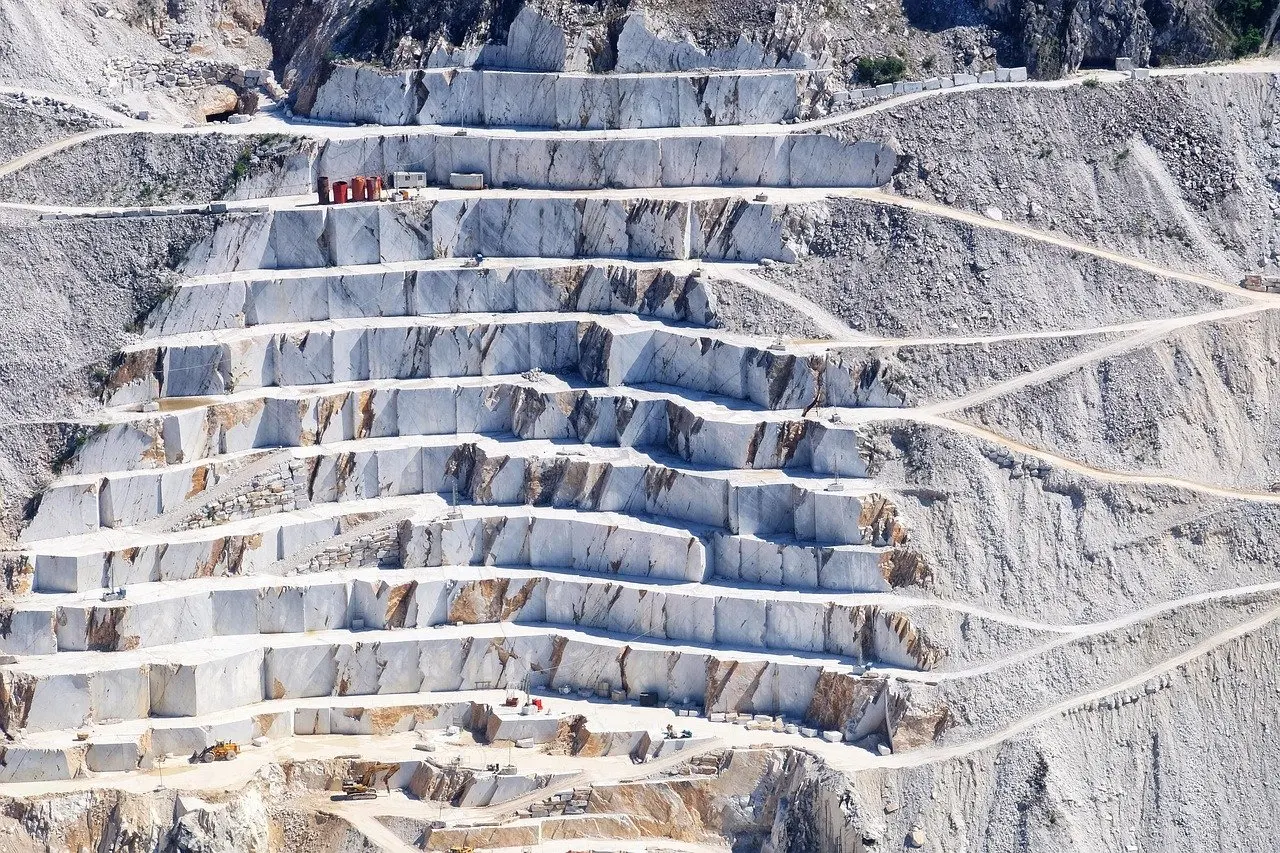
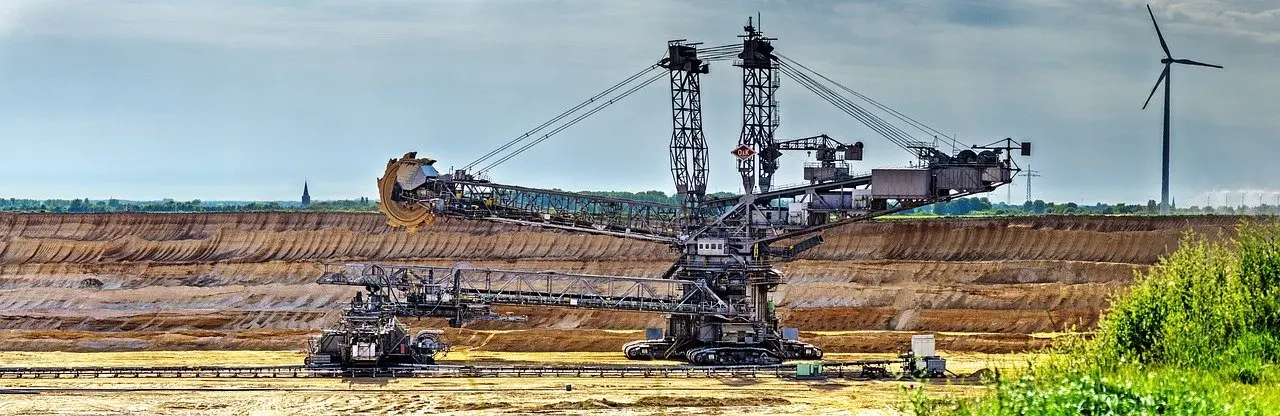
Ecocritical art of this kind often deals with large-scale change, such as the extraction and reshaping of land. The photograph below shows an open-pit mine with a bucket-wheel excavator. It illustrates the kind of industrial transformation these artists address, and it is not an artwork itself.
The practical question is how to approach such work. The choices below suit different readers.
- Choose works that argue a position. Because the artists in The World to Come challenge human mastery over nature, a piece that questions control of the land says more about the concept than a picturesque view does.
- Pair looking with reading. The Open Humanities Press book Art in the Anthropocene brings together artists, curators, theorists and activists. A reader who wants more than a gallery label can use it to compare viewpoints from several fields.
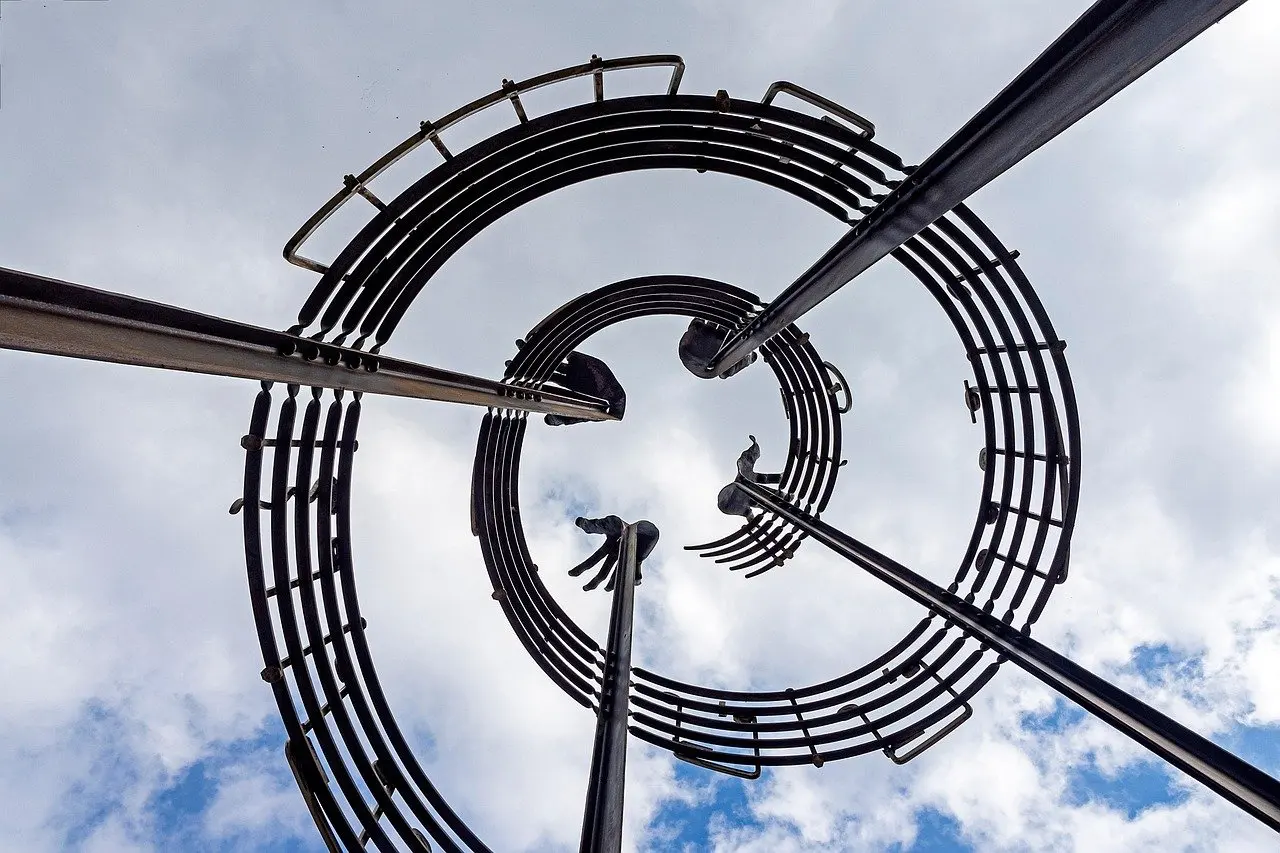
- Take the work outdoors. Some responses meet the landscape directly rather than hanging on a wall, and contemporary outdoor sculpture covers that route.
- Add the historical background. Readers who want earlier ecological practice alongside current work can use ecological art history as the starting point.
Anyone choosing a first exhibition or text should favour projects that state how they define the Anthropocene. That makes comparison easier, as the next sections show.
Exhibitions that have explored the Anthropocene
The World to Come: Art in the Age of the Anthropocene ran at the Harn Museum of Art at the University of Florida in Gainesville from September 18, 2018 to March 3, 2019. According to the announcement, Kerry Oliver-Smith curated it, with more than 65 works by 45 international contemporary artists. It then travelled to the University of Michigan in Ann Arbor, from April 27, 2019 to July 28, 2019.
The exhibition is organised around seven overlapping themes:
- Deluge and Raw Material, which deal with water and the extraction of resources.
- Consumption and Extinction, which deal with use and loss.
- Symbiosis and Multispecies, which looks at living relationships beyond the human.
- Justice and Imaginary Futures, which move from fairness to speculation.
The order matters for anyone planning a visit or building a reading list on the topic. The themes run from physical processes to ethical questions and imagined futures, so the concept covers more than environmental damage. A visitor interested in politics can start with Justice. A visitor drawn to science can start with Deluge or Extinction. Overlapping themes also mean one work can sit under several headings, so a single theme is a guide and not a boundary.
Printed matter extends the same conversation beyond gallery walls. The book Art in the Anthropocene, published by Open Humanities Press, is a publication rather than an exhibition, and it widens the discussion to theorists and activists as well as artists.
What the Anthropocene means
The Anthropocene is a proposed geologic epoch, defined by the effect that people have had on the Earth. In the language of the exhibition announcement, human impact has created a profound and disastrous effect, with runaway climate change among its drivers.
The geological framing is what separates the term from a general phrase such as environmental crisis. Epochs are units of geological time, and rock layers (strata) are the usual record of them. The exhibition announcement points to a tension in the idea: geological epochs are known as products of slow change, but the Anthropocene has been characterised by speed.
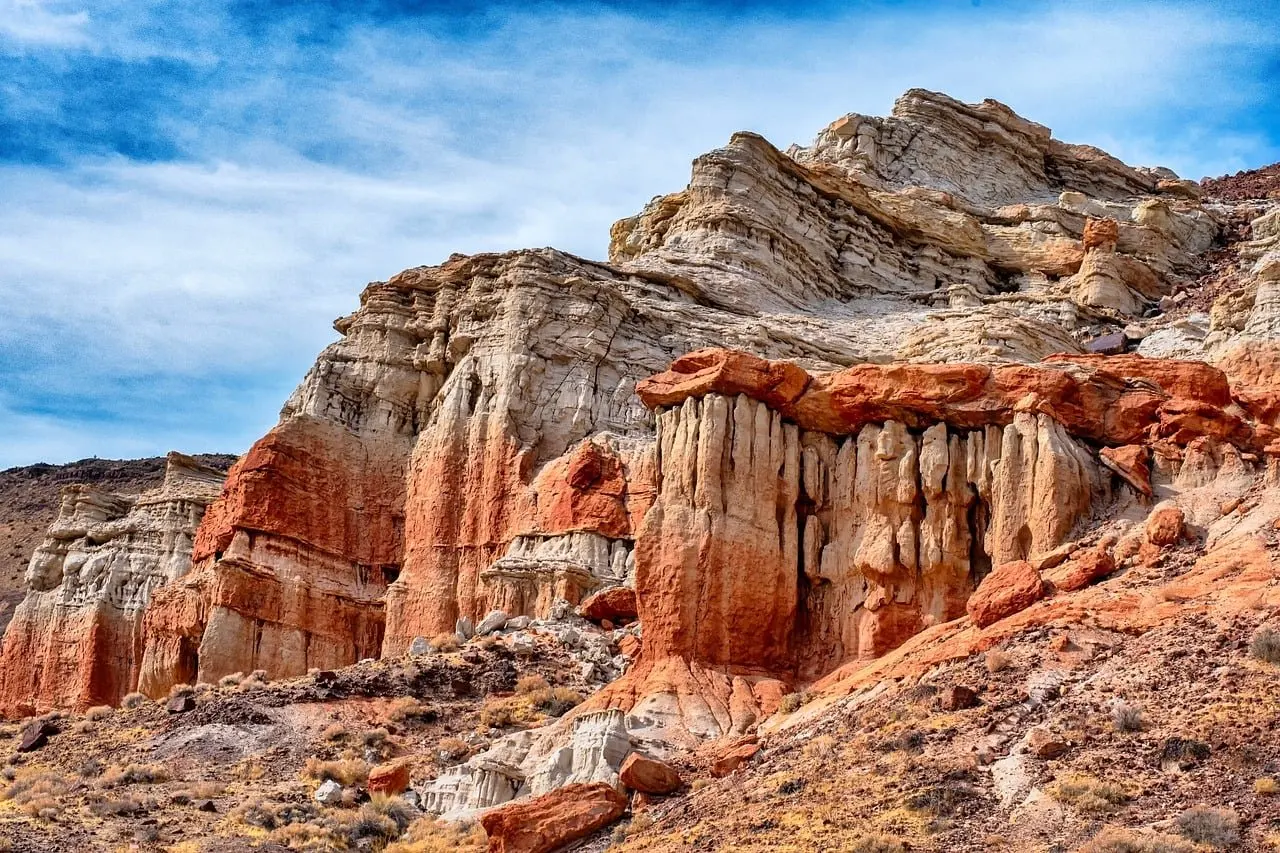
That mismatch has a direct consequence for artists. A concept built on deep time is being applied to change that people can watch within a lifetime. Artists often work in that gap, making the pace of change visible in a form a viewer can take in during one visit. The sense of urgency in much Anthropocene-themed work comes from this pairing of a slow measuring scale with fast events.
A contested status and why it matters for art
The Anthropocene is not presented in these sources as a simple scientific fact. Open Humanities Press describes Art in the Anthropocene, published in 2014, as taking as its premise that the proposed geologic epoch is necessarily an aesthetic event. The same publisher’s description says the book reimagines the Anthropocene as an affective rather than a scientific fact.
Those two framings carry weight for readers. If the Anthropocene is partly something that people feel and imagine, art is not merely illustrating a scientific finding. It becomes part of how the idea is understood in the first place. That explains why curators, theorists and activists appear alongside artists in the same volume.
The practical lesson is to read the label carefully. When a show, essay or artwork uses the word Anthropocene, check whether it means the geological proposal, the lived and emotional experience of human impact, or both. A work that depends on a strict stratigraphic claim needs scientific backing. A work that explores the aesthetic and affective side does not, and judging it by the first standard would be a mistake.
Frequently asked questions
Is the Anthropocene an official geological epoch?
The sources here describe it as a proposed geologic epoch. Writers who want to stay accurate should call it proposed and avoid presenting it as an established unit of geological time.
Who contributes to the book Art in the Anthropocene?
Open Humanities Press lists contributions from artists, curators, theorists and activists. Named contributors include Bruno Latour, Donna Haraway with Martha Kenney, and Ho Tzu Nyen.
When was Art in the Anthropocene published?
A mirror catalogue entry on the Internet Archive lists 2015, so the publisher’s date is the safer one to cite.