| Term | What the evidence supports | Planning use |
|---|---|---|
| Environmental art | A recognized movement from the 1960s. It contains practices such as Land art, Earth art, Sustainable art and Conceptual art. | Use it as the broad label when a work involves landscape, natural materials or ecological concern in any form. |
| Land art (Earthworks) | Developed in the late 1960s. It is perceived as the first artistic movement to address environmental issues. | Use it for large sculptures made directly in the landscape, not for every work with an ecological theme. |
| Ecological (eco) art | Draws on traditions traced to the Land Art and Ecofeminism movements of the 1960s. | Use it when ecological concern drives the work more than landform or scale does. |
Definitions and dates here draw on Artwork Archive’s overview of environmental art and limna.ai’s survey of the ecological turn.
What is environmental art? It is a recognized movement from the 1960s that groups practices such as land art, earth art, sustainable art and conceptual art, all working with the natural world as subject, site or material.
This guide sorts the vocabulary and gives a short timeline. The wider field is mapped in contemporary art and environment, and the sections below show how the terms change what a reader should expect from a work.
Choosing the right term
The label attached to a work tells a reader what to expect about scale, site and intent. Four practical choices follow from the vocabulary.
- Use “environmental art” as the umbrella. Artwork Archive places Land art, Earth art, Sustainable art and Conceptual art inside it, so the broad term is the safe choice when a work does not fit a single practice.
- Use “land art” or “earthworks” for landforms. UK Essays describes the work as mostly huge-scale sculptures made directly in nature with natural materials. A gallery piece that only references landscape does not match that description.
- Use “ecological art” or “eco art” when concern for ecosystems leads. The ecological turn in art is traced to 1960s Land Art and Ecofeminism, so the term signals a theme and an ethic more than a particular size or site.
- Use “sustainable art” or “conceptual art” for those specific strands. Both sit inside environmental art, according to Artwork Archive, and both can be named alongside the broader label.
These terms overlap, and a single work can reasonably carry two of them. Choose the narrower term only when the work clearly fits its definition.
How land art differs from environmental art
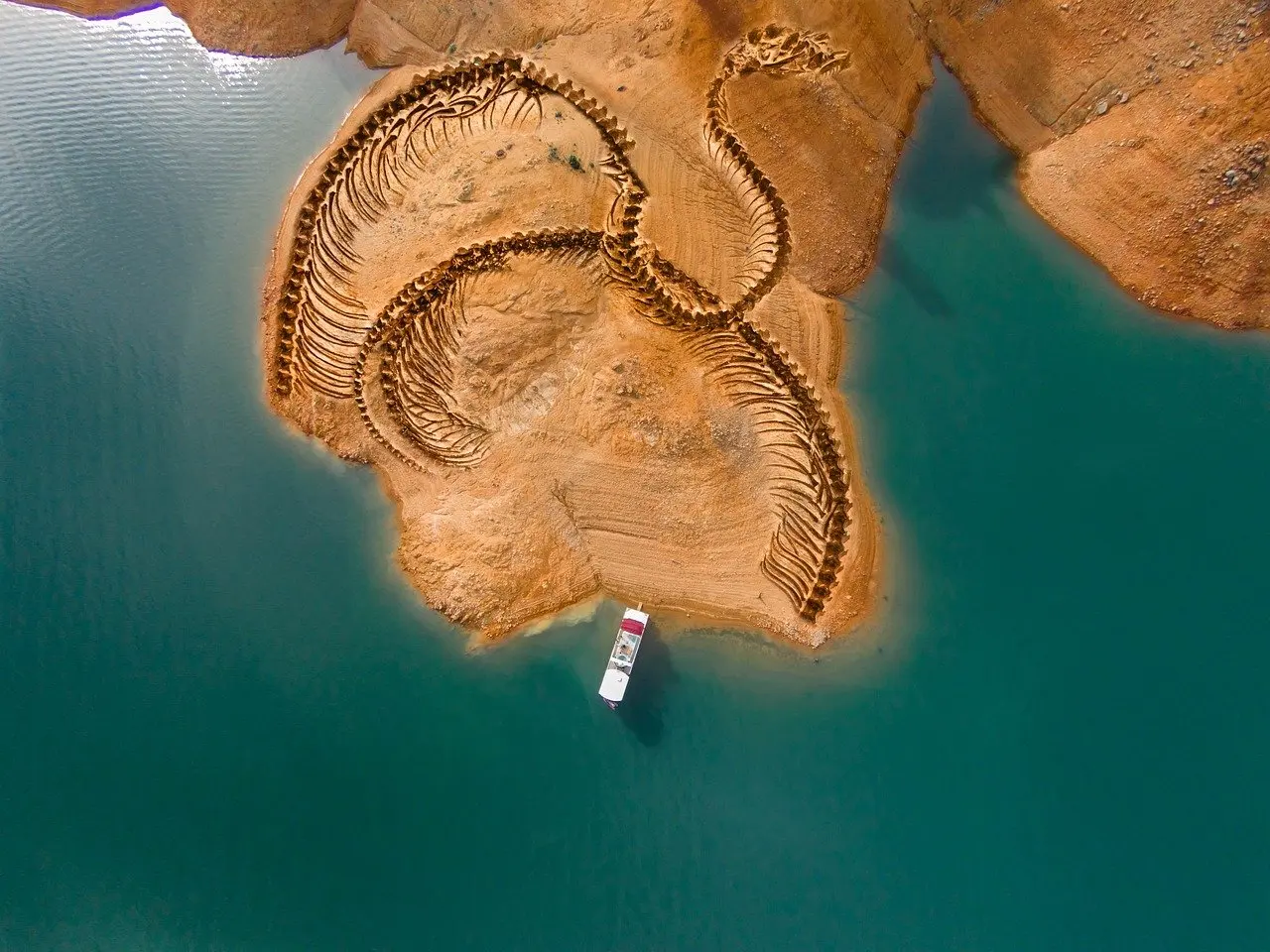
Land art is one practice within environmental art, not a rival to it. UK Essays says Land Art developed mainly in the late 1960s and is also known as Earthworks, while Artwork Archive defines earthworks as large-scale sculptures that use the earth itself as their medium.
The difference is breadth. Environmental art also takes in sustainable and conceptual work, so it can describe projects that never reshape a landform. Land art is the narrower, site-bound branch, and limna.ai notes that it is perceived as the first artistic movement to address environmental issues. That history explains why the two terms are so often confused.
As a rule of thumb, call a work land art when the artist shaped the ground or natural material on site at large scale. Call it environmental art when the subject is the environment, whatever the medium. For site-by-site detail, see what is land art.
When and how environmental art began
Environmental art emerged as a recognized movement in the 1960s, according to Artwork Archive, which names Jean-Max Albert and Nils Udo among the artists who started the movement with their works. Land art developed in the late 1960s, and the ecological strand grew from traditions traced to 1960s Land Art and Ecofeminism.
The dated works below show how the practice widened from landforms to performance-like figures, reclamation and public projects.
- 1967: Richard Long’s A Line Made by Walking appears in the UK Essays survey of land art as an early work.
- 1969: Double Negative was built at the Mormon Mesa, near Overton, Nevada, according to the same survey. In the same year, Displaced, Replaced Mass relocated three granite boulders into a ditch covered in concrete, as limna.ai records.
- 1970: Spiral Jetty was made at Rozel Point on Great Salt Lake, in Utah.
- 1973: Ana Mendieta carved and shaped figures in earth, ice and water.
- 1979: Robert Morris cleared an abandoned gravel pit in the Kent Valley, and a symposium titled Earthworks: Land Reclamation as Sculpture was sponsored, as Artwork Archive reports.
- 1982: Agnes Denes planted a field of wheat on two acres of rubble-strewn landfill near Wall Street, in lower Manhattan.
- 2014: Ice Watch harvested twelve large blocks of ice from the Greenland ice sheet for public display.
- 2019: Sun & Sea won the Golden Lion at the 58th Venice Biennale.
Read the sequence as a widening of scope. The earliest items are about land and scale, the 1979 and 1982 items are about repairing or repurposing damaged ground, and the later items are about public attention and climate themes.
Materials and methods
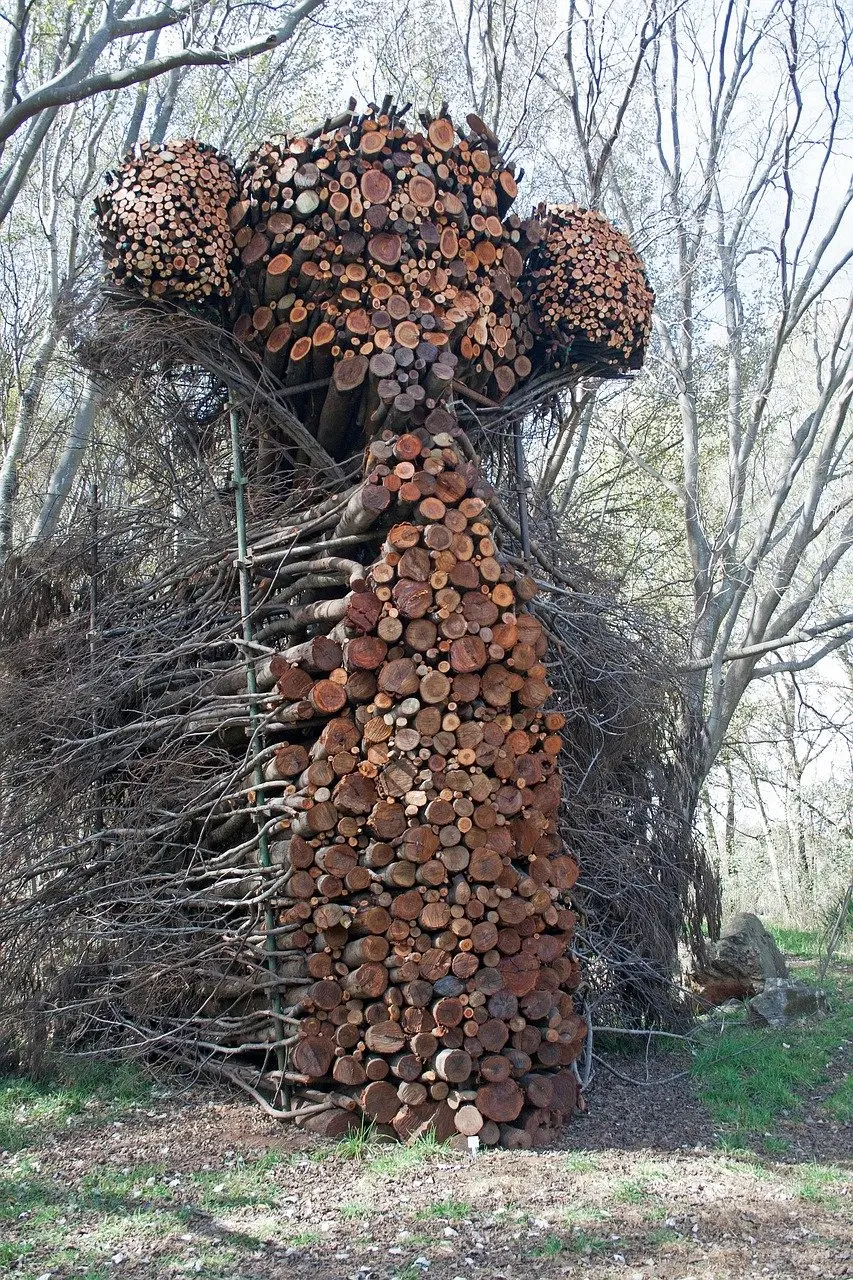
Environmental artists use whatever carries the subject: soil and rock, water and ice, crops, salvaged metal, or carved stone. The choice of material usually decides where the work can exist and how it is made.
Earth, rock and water
UK Essays reports that Spiral Jetty was made from rocks, mud and precipitated salt crystals. A work of this kind is closer to a construction project than to a studio object, which is why land art is tied to specific sites.
Living and perishable material
Denes’s wheat field used a crop on landfill in lower Manhattan, and Ice Watch brought twelve blocks of Greenland ice into public view. In both works the material itself points at the subject: land use in a city in one case, the Greenland ice sheet in the other. Such works suit viewers who want the issue stated through the medium rather than through a label. Work built from living organisms is the subject of the guide on what is bio art.
Repurposed and built materials
Not every environmental work is raw nature. Artwork Archive describes Ilan Averbuch repurposing steel from the historic Rogers Bridge, a vital transportation link, in an installation-style public work. It also describes a sculpture by Bjorn Skaarup whose base is a map made from a solid slab of granite, carrying bronze animals. These examples show that installation art and sculpture belong to the field when the materials or the site carry the ecological or historical point.
Reclaimed land and public funding
Reclamation is where environmental art overlaps most with land management. The same year’s symposium, Earthworks: Land Reclamation as Sculpture, framed repair of damaged ground as a sculptural task.
The practical consequence is that public bodies can commission such work as part of land restoration, not only as a gallery purchase. Denes’s 1982 wheat field on landfill, described by limna.ai, shows the same logic in an urban setting.
Galleries, biennials and curators
Environmental art is not limited to remote sites. In Italy, Sun & Sea won the Golden Lion at the 58th Venice Biennale in 2019, a prize that limna.ai counts within the ecological turn in art. Large international exhibitions give environmental themes an audience that field sites cannot.
A curator is the person who selects and presents work in such settings. Artwork Archive quotes Antonia Dapena-Tretter, the hospital’s art curator, in its discussion of a hospital art collection, which shows curators placing environmental and nature-related art in everyday public buildings as well as galleries. When a work moves indoors, the curator’s choices of context and display carry much of its meaning.
Frequently asked questions
What does eco art mean?
Eco art, or ecological art, refers to art shaped by ecological concern. Its traditions are traced to the Land Art and Ecofeminism movements of the 1960s, and it is best treated as a thematic strand within the wider environmental art field.
Who started the environmental art movement?
Artwork Archive names Jean-Max Albert and Nils Udo as artists who started the movement with their works. It places the emergence of environmental art as a recognized movement in the 1960s.
Is land art the same as earthworks?
Yes. UK Essays says Land Art, developed in the late 1960s, is also known as Earthworks. Artwork Archive defines earthworks as large-scale sculptures that use the earth itself as their medium.
Was land art the first environmental movement in art?
It is perceived that way. limna.ai describes Land Art as perceived as the first artistic movement to address environmental issues, which is why it is often treated as the starting point of the wider field.