
| Factor | Supported value or condition | Planning use |
|---|---|---|
| Industrial flue gas temperature | 150°C to 600°C | A wide band, so check the actual stack temperature before judging whether an ORC fits. |
| Cement industry flue gas | 200°C to 400°C | A sensible first screening case for moderate-temperature recovery. |
| Capital cost | USD 3,000 to 6,000 per kW of installed capacity | Use as an early budget range, not a quotation. |
| Heat availability | Flue gas is often intermittent in industrial processes | Obtain the operating-hour profile before modelling payback. |
| Heat exchanger condition | Fouling and corrosion are primary concerns with flue gases | Weigh exchanger design and maintenance planning alongside the turbine. |
Figures are drawn from a Patsnap Eureka technical review of ORC heat recovery from flue gas, a secondary industry source.
Organic Rankine cycle waste heat recovery converts moderate-temperature heat into electricity using an organic fluid that boils below water. Payback depends mainly on a steady heat source, a suitable temperature and the installed cost per kilowatt.
This guide sits within the wider field of energy recovery from waste methods, where ORC is the option for heat that is too cool for a conventional steam plant to use well.
Cost and payback drivers
An ORC plant costs roughly USD 3,000 to 6,000 per kW of installed capacity, according to the Patsnap Eureka review. Treat that span as a screening range. Where a project lands inside it, or outside it, depends on site conditions that the headline figure cannot capture.
- Heat supply hours. Intermittent flue gas availability in many industrial processes creates operational complexities and weighs on the economics. A continuous process suits an ORC far better than a batch process with long idle periods, because the equipment is paid for whether or not heat is flowing.
- Exchanger durability. Fouling and corrosion of heat exchangers remain primary concerns, particularly when processing flue gases. If the exhaust is dirty or corrosive, the cost of resistant exchangers and upkeep belongs in the payback calculation from the start.
- Fluid choice. The working fluid has to balance thermodynamic performance against thermal stability, environmental impact and economic considerations. A fluid that looks best on paper for performance can lose out once its stability and cost are counted.
The practical rule is to walk away from an ORC when heat is sporadic and the exhaust is aggressive, and to pursue it when heat arrives steadily at a moderate temperature. Which heat sources meet that test is the next question.
Matching heat sources to an ORC
Industrial exhaust gases typically carry temperatures from 150°C to 600°C, which the Patsnap Eureka review describes as significant untapped energy potential. The cement industry alone produces flue gas between 200°C and 400°C. That moderate band is where organic fluids earn their place.
The width of the overall range matters for planning. A stack at the cooler end and one at the hotter end call for different fluids and cycle settings, so a single standard module will not fit every site. Start from measured exhaust temperature and flow, then select the fluid and exchanger design around them.
When ORC beats a steam cycle
An ORC is the better choice when the temperature differential is too small for a conventional steam cycle. The Patsnap Eureka review notes that such differentials are typically insufficient for conventional steam cycles, and that the lower boiling points of organic fluids proved advantageous for extracting energy from moderate-temperature heat.
In practice the decision follows the heat source. If a process offers only moderate-temperature heat, water is a poor working fluid and an organic fluid is the workable route to electricity. If the temperature differential is large enough for steam, the conventional cycle does not face that limitation.
Power is not the only use of waste heat. A site that can use the heat directly may prefer to compare an ORC with cogeneration, which is explained in how does cogeneration work. The choice rests on whether the site values extra electricity or usable heat more.
How an ORC recovers waste heat
An organic Rankine cycle recovers waste heat by using an organic working fluid instead of water, which allows efficient energy conversion at lower temperature ranges. Heat from the exhaust vaporises the fluid, the vapour drives an expander coupled to a generator, and the fluid is then condensed and returned to be heated again.
Evaporator and condenser
The evaporator is where exhaust heat enters the cycle and the working fluid changes to vapour. The condenser sits at the other end and returns the fluid to liquid after expansion. Performance is tuned through evaporation and condensation temperatures, working fluid selection and heat exchanger design, so these components shape the whole cycle rather than just supporting it.
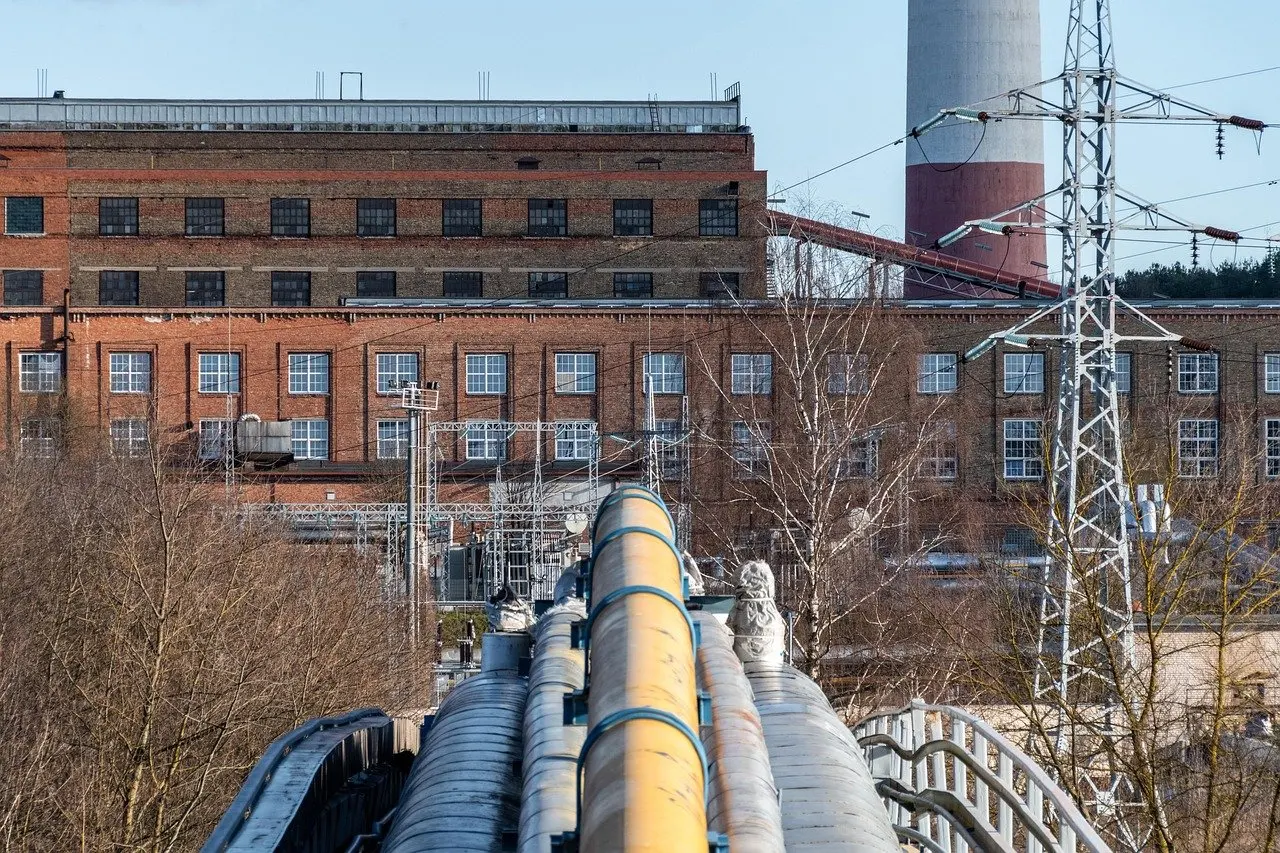
Because exchanger condition is central to both reliability and output, the types of heat exchangers for heat recovery deserve attention early in design, not after the turbine has been chosen.
Expander
The expander is the component that turns vapour pressure into shaft power for the generator. Its operating conditions are set by the evaporation and condensation temperatures chosen for the cycle, which is why the expander cannot be specified in isolation from the heat exchangers and the fluid.

Working fluids and why they are used
Flue gas ORC systems predominantly use organic working fluids such as R245fa, toluene and siloxanes, as the Patsnap Eureka review reports. Organic fluids are chosen because their lower boiling points are advantageous when extracting energy from moderate-temperature heat.
The choice is a trade-off, not a ranking. Working fluid degradation is a significant challenge, especially in high-temperature applications, so a hotter source narrows the list of fluids that stay stable. Environmental impact and cost also count alongside thermodynamic performance.
- Cooler sources. Fluid stability is less of a limiting concern, so performance and cost can lead the selection.
- Hotter sources. Check the risk of thermal decomposition first; a fluid that fails here cannot be rescued by good performance elsewhere.
- Any source. Weigh environmental impact explicitly, since it is one of the factors the fluid must balance against performance.
Efficiency limits with low temperature heat
ORC efficiency with low temperature heat is governed by the cycle settings, not by the technology label. Evaporation and condensation temperatures, working fluid selection and heat exchanger design are the parameters optimised to improve heat recovery, and each interacts with the others.
The consequence for buyers is to compare proposals on the same stated conditions. Two offers quoting different source temperatures or condensing conditions are not comparable, however similar their headline efficiency looks. Ask for the assumed heat source temperature and the cooling assumptions behind every efficiency claim.
Efficiency also has to be weighed against the cost range and heat availability discussed above. A modest-efficiency unit on a steady source can repay its capital better than a higher-efficiency unit that runs only part of the year.
Frequently asked questions
What temperature range do ORC working fluids operate in?
Working fluid temperatures typically operate between 80°C and 350°C, according to the Patsnap Eureka review. Heat sources that fall within that band are the natural candidates for an ORC.
Which industries produce heat suitable for ORC recovery?
Manufacturing industries, particularly the steel, cement, glass and petrochemical sectors, generate flue gas that is a target for ORC recovery, as the same review describes.
Why do fouling and corrosion matter in an ORC?
Exchangers that handle flue gas are prone to fouling and corrosion, which sit at the top of the list of design worries. Newer exchanger designs have improved heat transfer coefficients by 20% to 30% compared with earlier generations, which helps, but dirty exhaust still needs to be planned for in design and maintenance.