
A site burns gas for electricity and its hot exhaust simply escapes. So how does cogeneration work? A generator makes power as usual, and the heat it would waste is recovered for space heating or process heat.
The same idea sits among the energy recovery from waste methods covered across this site. This article separates what cogeneration does from what it is often mistaken for, then covers efficiency, trade-offs and trigeneration.
From fuel to electricity and useful heat
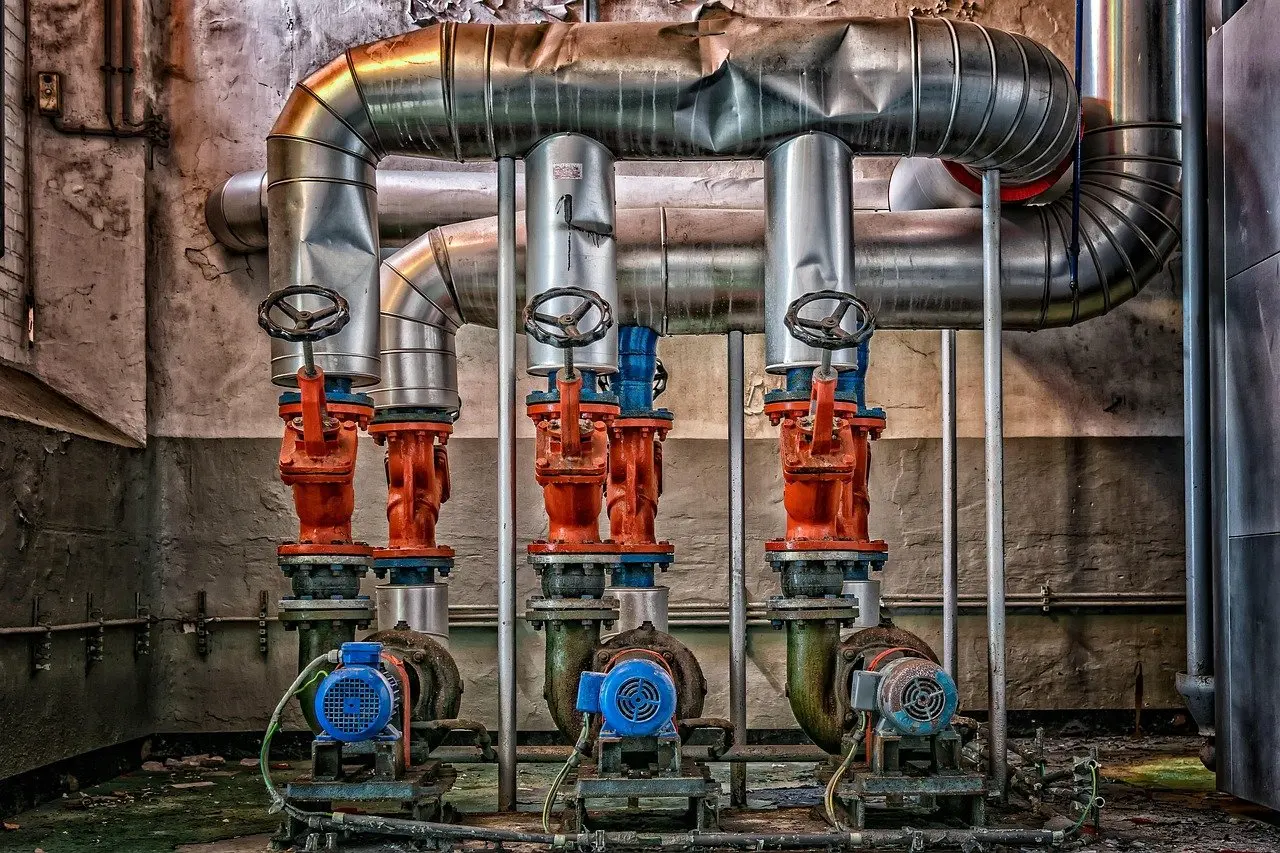
Combined heat and power (CHP) is another name for cogeneration. It means that the waste heat of electricity generators is recovered for useful applications. The generator is driven by a prime mover such as a gas engine or a gas turbine. Heat exchangers capture the heat the prime mover would otherwise discard, and a hot-water or steam circuit carries it to where it is needed.
The defining feature is where that heat goes. In cogeneration the recovered heat is not used to produce additional electricity, but to provide space heating, process heat and similar services. One fuel input therefore serves two outputs, power and heat, from a single installation.
Cogeneration compared with look-alike systems
Several systems recover heat from a generator, and they are easily confused. The table separates them by what happens to the heat.
| Arrangement | What the waste heat does | Planning use |
|---|---|---|
| Cogeneration (CHP) | Supplies space heating, process heat and similar uses | Suits sites with a real heat demand next to the generator |
| Combined-cycle gas turbine | Waste steam drives a second generator | An electricity-only route; it does not deliver heat to users |
| Trigeneration | Part of the waste heat provides cooling | Suits sites that need cooling as well as heat and power |
The distinctions follow the energy transition wiki’s description of cogeneration, which warns against confusing it with combined-cycle gas turbines.
Common misunderstandings about how CHP works
“The waste heat makes more electricity”
That describes a combined-cycle plant, not cogeneration. Combined-cycle gas turbines recover steam to drive a second generator. A cogeneration unit sends the same heat to a building, a process or a network, so its second product is heat. Anyone whose goal is more electricity from low-temperature heat should look at organic rankine cycle waste heat recovery instead, which is a different route to a different output.

“Any CHP unit automatically saves fuel”
The saving exists only when the recovered heat is used. Heat is valuable in cogeneration because it replaces heat that would otherwise be produced separately, for example by a boiler. If nobody needs the heat at that moment, the unit is back to being an ordinary generator that wastes it. A CHP project is therefore sized and judged by its heat demand first and its electricity output second.
“Heat and power demand must match at every moment”
They need not, because heat can be much more easily and efficiently stored than electricity. A heat store lets a CHP unit run when electricity is wanted and bank the heat for later. This is why CHP can follow power demand rather than being tied to the heating load alone. The practical consequence is that a storage tank is often a sensible part of the design rather than an optional extra.

CHP efficiency against separate generation
The efficiency case rests on a simple fuel balance. With separate production, a power station burns fuel for electricity and discards its heat, while a boiler burns more fuel to make heat for the same site. With cogeneration, one fuel input produces the electricity and the heat together, so the boiler’s share of fuel largely disappears.
The size of the gain depends on how much of the recovered heat finds a use. A plant that sells or consumes nearly all its heat gets the most from the fuel burned. A plant that vents heat for lack of demand gets little more than the electricity-only result. A site comparing options should therefore compare two columns of fuel use: the electricity and boiler fuel it buys or burns today, and the fuel the CHP unit would burn for the same electricity and heat. Manufacturer data and a measured heat profile for the site give the actual numbers.
Advantages and disadvantages of cogeneration
The case for CHP is strongest where heat is needed continuously. The trade-offs mostly come from that same dependence on heat users.
- Fuel is used twice. Heat that would be discarded is recovered for space heating or process heat, which is the central advantage.
- Flexible operation. Because heat stores well, a unit can follow electricity demand while a tank carries the heat load.
- Policy support. Germany’s Cogeneration Act aims for the country to get 25 percent of its power supply from cogeneration units by 2020, a target that shows how national policy has treated CHP as a significant contributor.
- Dependence on a heat user. The benefit disappears if the heat has nowhere to go, so the site, not the machine, decides whether the project works.
- Not an electricity booster. Cogeneration does not raise electrical output from waste heat, so it is the wrong tool when more power alone is the goal.
When the heat can be piped beyond one building, a network widens the pool of users; district heating from waste heat looks at that approach.
Trigeneration explained
Trigeneration extends cogeneration by adding cooling to the outputs. Its recovered heat is not limited to heating: the waste heat is partly also used to provide cooling. In practice that means part of the heat can drive a heat-driven cooling machine such as an absorption chiller, while the rest still supplies heating.
The logic is the same as for CHP: the value comes from using heat that would otherwise be lost. Trigeneration widens the set of possible heat users, because a site with little winter heating can still use the heat for cooling. It suits premises that need power, heat and cooling, and it adds equipment and complexity that a heat-and-power-only site does not need.
Choosing between the options
Start from the heat. If a site has a steady need for space heating or process heat, cogeneration is a natural fit. If it also needs cooling, trigeneration deserves a look. If the heat has no nearby user and the goal is more electricity, a combined-cycle arrangement or an organic Rankine cycle addresses a different problem. Matching the machine to the heat demand comes before choosing the prime mover, whether gas engine or gas turbine.
Frequently asked questions
| Question | Answer |
|---|---|
| Is combined heat and power the same as cogeneration? | Yes. Both terms describe recovering the waste heat of an electricity generator for useful applications such as heating. |
| Is a combined-cycle gas turbine a cogeneration plant? | No. In a combined-cycle plant the recovered steam drives a second generator, whereas cogeneration puts the heat to work as heating or process heat. |
| Why can a CHP unit follow electricity demand? | Heat is stored much more easily and efficiently than electricity, so surplus heat can be held while the unit responds to power needs. |
| What does trigeneration add to cogeneration? | Cooling. Part of the waste heat is used to provide it, alongside electricity and heat. |