| Effect or condition | Typical value | Planning use |
|---|---|---|
| Heat recovery efficiency of MVHR systems | 80–90% | Use as a typical range when comparing units, then ask for the figure on the specific unit’s data sheet. |
| Heating cost reduction | 10 to 30% | Treat as a range when judging payback against installed cost, not as a promise. |
| Heat retained from ventilation losses | About two thirds to three quarters | A more conservative description of the same benefit. Use it when the case for fitting MVHR rests on heat savings alone. |
| Whole-house MVHR installed cost | From around £3,000 | Treat as a budget starting point, not a quote. |
| Building airtightness | Works best in relatively airtight buildings | Check how airtight the building is before specifying a system. |
| Household moisture output | Up to 20 litres (4.4 gallons) per day | Shows why a sealed home needs steady ventilation. |
The efficiency, cost and airtightness figures come from the Centre for Sustainable Energy’s MVHR guidance, and the heat-retention and moisture figures from Explain that Stuff’s heat recovery ventilation explainer.
How does heat recovery ventilation work? A fan-driven unit passes warm extract air and incoming supply air through a heat exchanger, so heat transfers without the airstreams mixing. It suits relatively airtight buildings best.
This guide covers heat recovery at building scale: ventilation exchangers, drain water and heat pumps. For the waste-treatment side of the subject, see energy recovery from waste methods.
Efficiency, running costs and moisture
The practical result of heat recovery ventilation is that a building can be ventilated continuously without throwing away most of the heat in the outgoing air. The decisions that follow concern how much to expect, how much to spend and whether the building suits the system.
What the efficiency figures mean
The Centre for Sustainable Energy says MVHR systems typically have 80–90% heat recovery efficiency. Explain that Stuff describes heat recovery ventilators as retaining about two thirds to three quarters of the heat that would normally be lost. Both figures describe the same benefit from different angles, so the gap between them is a reason for caution rather than a contradiction.
For a quick comparison of products, the higher range is a fair description of what a good unit can achieve. For a business case that depends on heat savings, the lower description is the safer planning basis. Neither figure replaces the test result for a particular unit, so request that from the manufacturer’s technical data sheet before comparing models.
Costs and payback
The same Centre for Sustainable Energy guidance puts the reduction in heating costs at 10 to 30%, and whole-house MVHR systems start from around £3,000. A range of savings against a starting price means the payback depends on the home. MVHR is easier to justify when the building is already tight and a whole-house system is planned. It is harder to justify as a stand-alone upgrade in a leaky home where the exchanger cannot do its best work.
Moisture and indoor air
A typical family produces up to 20 litres (4.4 gallons) of moisture each day, according to Explain that Stuff. In a sealed, well-insulated home that moisture has to go somewhere, which is why ventilation is part of the design and not an optional extra. MVHR lets that ventilation run without the full heat penalty of simply opening windows.
Airtightness and building type
MVHR does need a reasonably airtight building to perform well. The Centre for Sustainable Energy states that MVHR works best in buildings that are relatively airtight, and it names reaching the necessary level of airtightness as a challenge when retrofitting.
The reasoning is practical. The exchanger only recovers heat from air that passes through it, so heat escaping through gaps in the building shell is heat the unit never gets to recover. Choose by building type:
- New or deeply renovated homes: the best fit, because airtightness can be designed in from the start.
- Older homes: MVHR will still work, but the highest efficiency may not be reached.
- Retrofits without air-sealing work: weigh the cost of reaching the airtightness the system needs before committing to ductwork.
How MVHR moves air and heat
An MVHR system extracts air from the building and supplies fresh air through a heat exchanger that transfers heat between the two flows. Understanding the parts makes it easier to judge specifications and to spot installation problems.
Extract air, supply air and the heat exchanger
The warm, extracted air is passed through a heat exchanger to recover the heat before it is expelled outside. Incoming supply air passes through the same exchanger and is warmed by that heat. The exchanger keeps the streams apart, so, as Flynn Heat Recovery notes, the extracted air is not mixed with the incoming air. Only heat crosses between them.
Summer bypass
In warm weather the heat exchanger is not always wanted. When outside air is cooler than inside, a bypass lets cool outside air enter the home without meeting the outgoing air. Ask whether a unit has this feature, particularly for a well-insulated home that holds heat.
Heat pumps and heat recovery
MVHR alongside a heat pump
MVHR does not heat a building by itself. Flynn Heat Recovery describes it as working in conjunction with a heating system, such as a boiler or heat pump. The ventilation unit reduces the heat lost through fresh-air supply, and the heating system supplies the rest.
Exhaust-air heat pumps
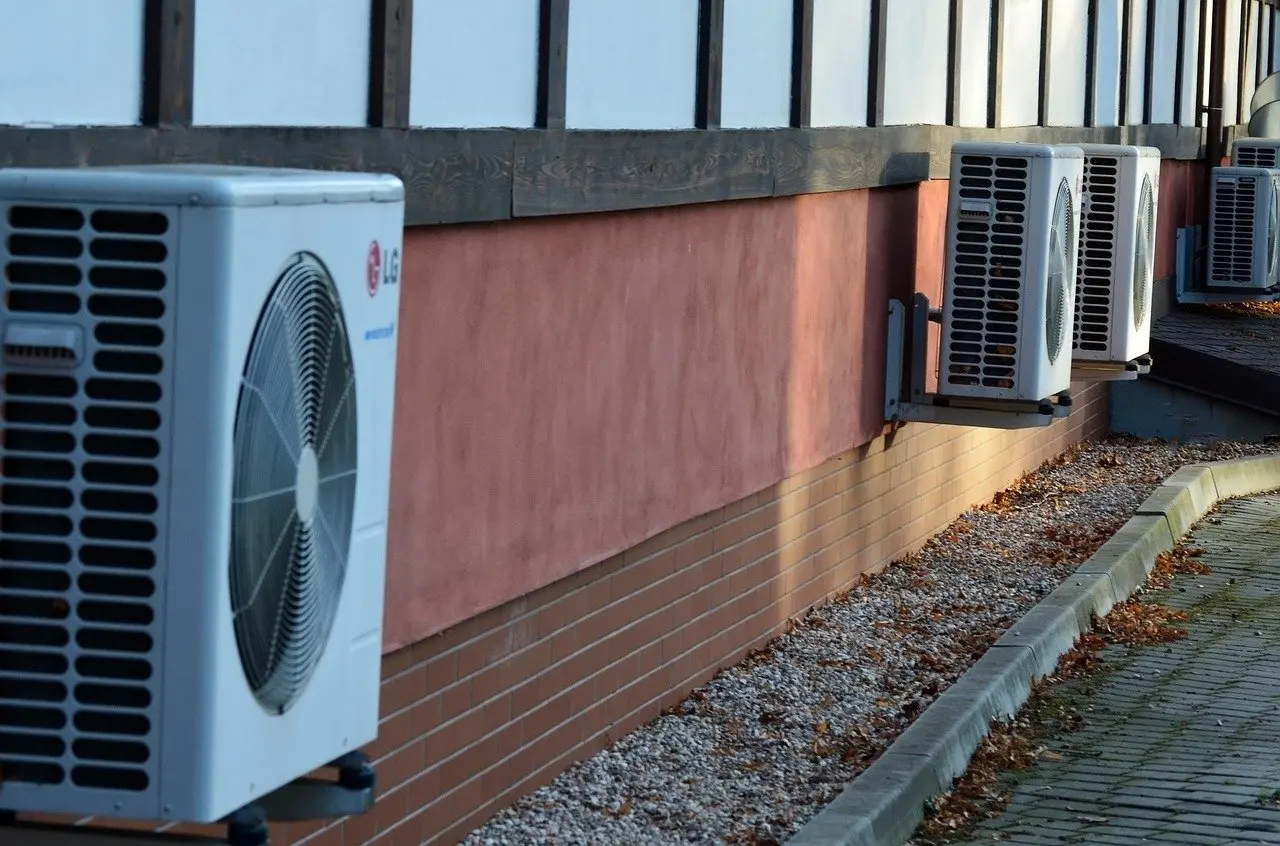
Heat pump heat recovery from exhaust air is a heating-system decision, separate from the exchanger inside an MVHR unit. An MVHR exchanger passes heat directly between airstreams, whereas a heat pump is a heating system in its own right. Weigh each product on its own technical data sheet, and do not read MVHR efficiency figures across to a heat pump.
Drain water heat recovery
Drain water heat recovery applies the same idea to warm water leaving the building instead of to stale air. It addresses a different heat loss from MVHR, so the two are not alternatives and either can be considered on its own merits. Compare manufacturer data sheets for any drain unit, and keep its figures separate from ventilation efficiency numbers.

Building-scale recovery and waste-based recovery
Building-scale heat recovery reuses heat that a building would otherwise lose through air or water. Waste-based routes, such as those covered in energy recovery from plastic waste, treat materials at an industrial scale. The aims are related, but the technology, scale and decisions differ.
Frequently asked questions
Where is an MVHR unit usually installed?
Flynn Heat Recovery says the unit is typically located in the attic or utility area. In a cold loft, the Centre for Sustainable Energy advises that the ductwork and condensate pipe be well insulated to reduce condensation risk.
What if a house is too leaky for MVHR?
Demand controlled ventilation may be the more appropriate system if the house is not airtight, according to Flynn Heat Recovery.
Can the fan speed be adjusted?
Usually there is a fan in each duct, and the settings can be adjusted manually or automatically, according to Explain that Stuff.