Anyone asking how contemporary art and environment connect can start with Italian examples: a Rome exhibition on people and nature, Turin’s foundations and collections, and a few background reads on land art and arte povera.
Quick answer: begin with the idea, then see how an exhibition frames it, then look at who pays for and keeps such work. For definitions, what is environmental art is the plain starting point. The sections below follow the reader goals most people arrive with.
Routes through the subject
Contemporary art that takes up environmental themes does not form one tidy genre. It runs from outdoor interventions to video, performance and objects made from discarded matter. The most useful way to enter is by goal, not by medium. Each route below ends at a section of this guide or a linked guide.
- Understand the idea before the artworks. Read what is environmental art, then what is land art for work made directly in and from landscape. This route suits readers who want vocabulary before they visit anything.
- See how one exhibition frames the issue. Go to the Rome case study in the next section. It shows how a single show can combine paintings, installations, videos and performances around one question about people and nature.
- Follow Italian roots. The post-war Italian movement arte povera is the natural bridge between modest materials and ecological thinking. This route suits readers interested in why Italian artists keep returning to humble matter.
- Follow the institutions. The sections on events, foundations and collections explain who organises, funds and keeps contemporary work. This route suits readers who plan visits, write about art or want to support it.
- Follow science and materials. art in the anthropocene sets the geological-age framing, and what is bio art covers work that uses living matter. This route suits readers who come from science or design.
If time allows only one route, choose the exhibition case study followed by the institutions. A concrete show with named dates and a stated aim makes the abstract vocabulary of the other routes easier to place.
How artists address environmental themes
Artists address environmental themes in three broad ways: by making work about a problem, by making work from the problem’s materials, and by changing how a work is produced and shown. The first appears in the Rome case below, the second in the waste subsection, and the third is the subject of sustainable art practices.
A Rome case: Ghê Gaia Terra
The contemporary art exhibition Ghê Gaia Terra ran at the Museum of the Walls in Rome. According to Finestre sull’Arte’s review, it was held from 22 April to 22 May 2022. The review describes its aim as reflecting, through art and the arts, on the future of the planet and on a new relationship between humankind and nature.
The scale is worth noting. The same review reports 29 artists, with videos and performances signed by 11 creative artists. That mix matters for readers choosing what to see: a show of this kind is not only wall-hung work, and a visitor who expects only canvases will miss the moving-image and live elements that carry part of the argument.
The exhibition also uses a symbol. The review notes that the tardigrade, a tiny animal able to survive up to thirty years without food or water, stands for resilience. A symbol like this gives visitors an entry point that does not depend on technical knowledge of art. It also shows a typical environmental-art move, which is to borrow an image from the natural world and let it carry an argument about the future instead of illustrating a single issue.
For a reader comparing artists, the useful question is not whether the show “solves” an environmental problem. It is what relationship between people and nature each work proposes. Readers who want named practitioners can continue to contemporary artists climate change.
Installation art and sculpture as environmental tools
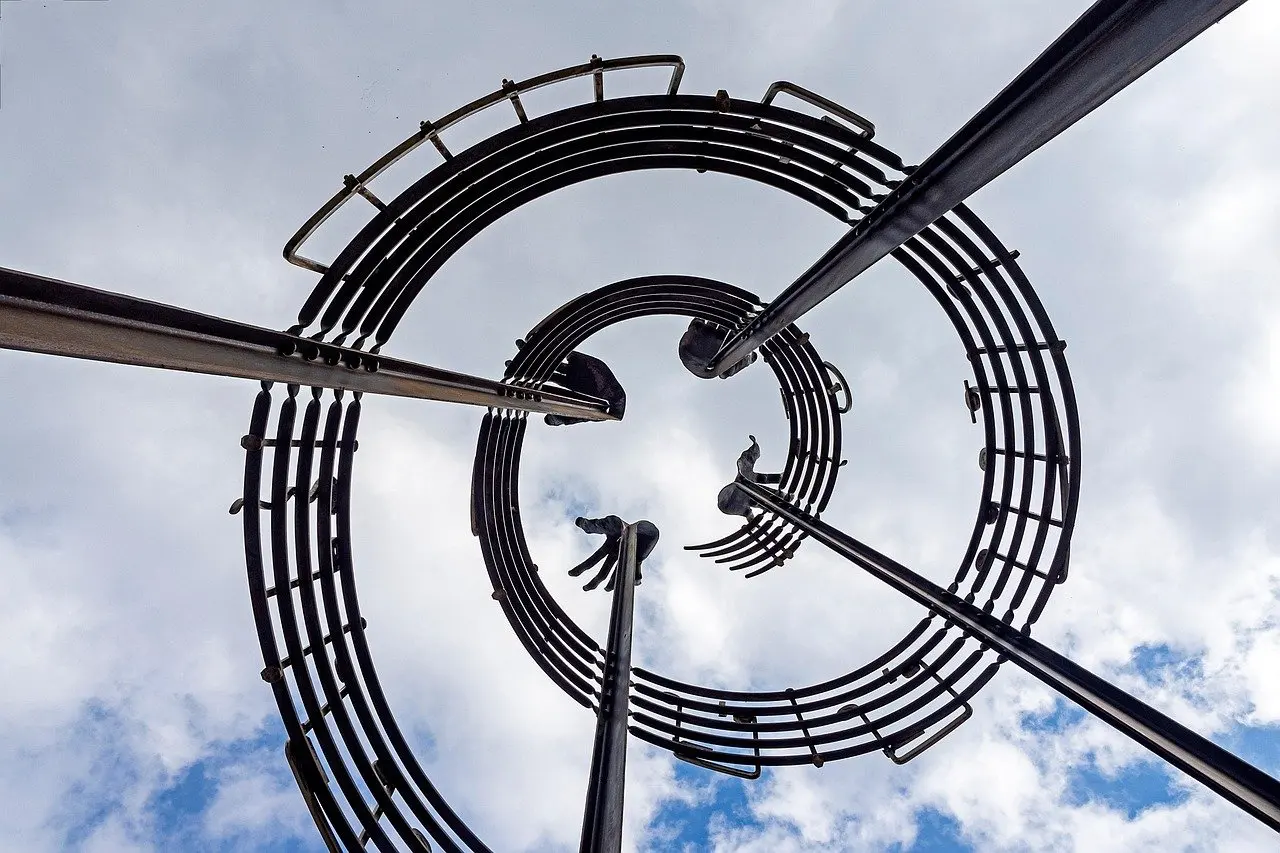
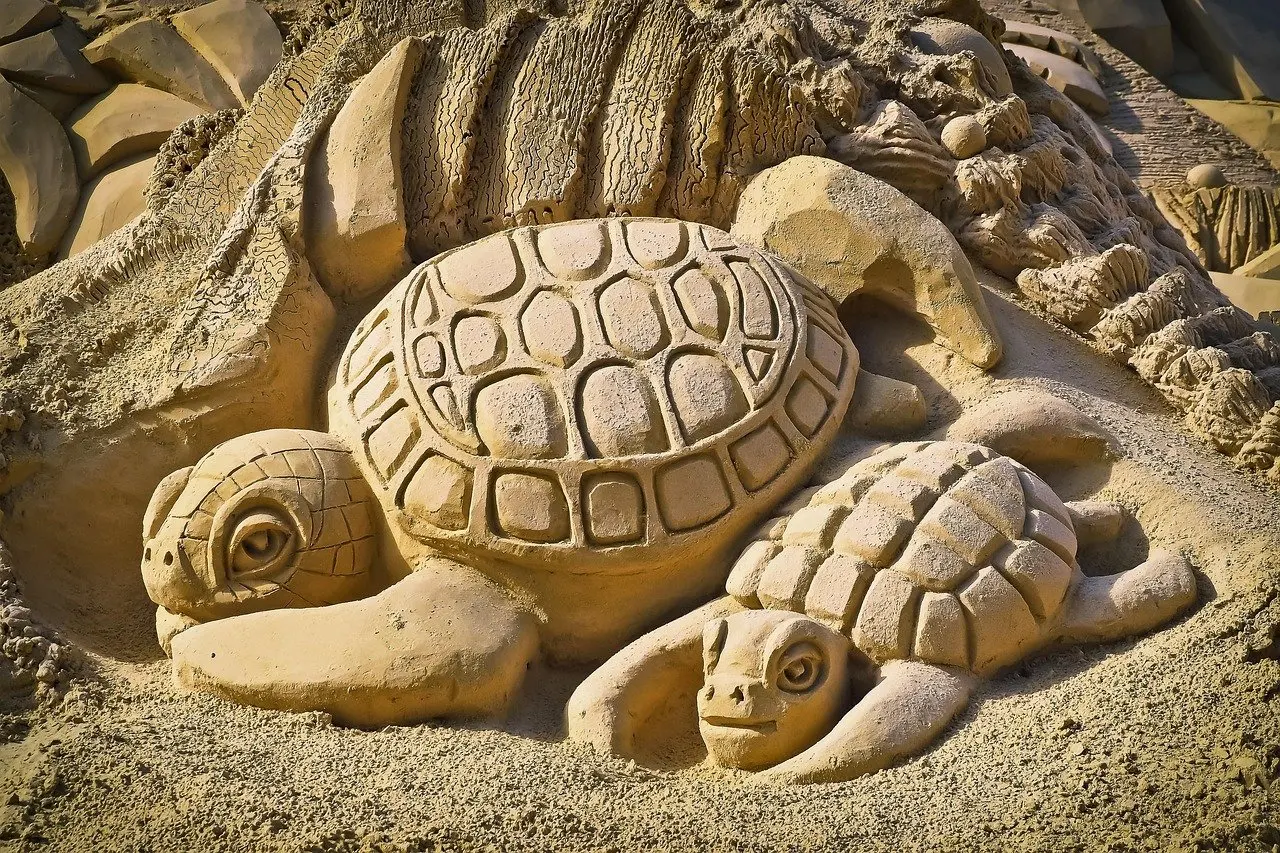
Installation art builds a space the visitor enters, so the viewer’s body becomes part of the work. That makes it well suited to environmental themes, where scale, atmosphere and the sense of being surrounded matter more than a single framed image. Sculpture, by contrast, gives a theme a fixed physical form that can stand in a gallery or outdoors and be walked around.
The choice between them is practical as well as artistic. An installation can be temporary and tied to an exhibition’s dates, while sculpture can remain in place and be encountered by people who never planned to visit an art venue. Readers interested in outdoor examples will find more in contemporary outdoor sculpture.
Waste and found materials
Many artists address environmental themes by working from discarded matter. The material itself carries the message: a bottle, a metal offcut or a piece of packaging already has a history of use and disposal before it enters the work. This approach lets the viewer recognise the object first and the argument second, which is why it travels well across audiences.
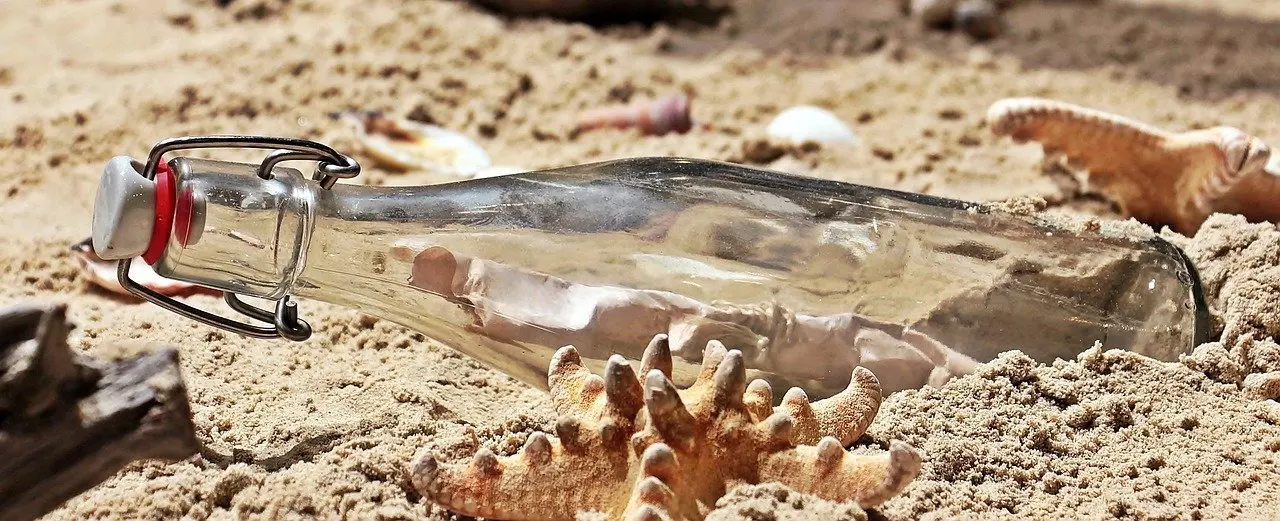
Two guides go further. contemporary art made from recycled materials looks at how reused matter is turned into finished work, and artists who use waste in their work focuses on consumption as a subject. A related thread is energy, taken up in art about energy. The difference to keep in mind is between recycled material as a medium and waste as a theme: a work can use one without the other.
Background movements worth knowing first
Environmental themes in contemporary art did not appear from nothing. Several earlier approaches shape how artists work with nature today, and knowing which one a work echoes helps a visitor read it.
- Land art. Work made in the landscape itself, often at a scale and location that cannot be moved to a gallery. what is land art explains the idea and why the site is part of the work.
- Arte povera. An Italian movement associated with modest, everyday and natural materials. The guide on arte povera connects it to nature. Fondazione Merz in Turin, discussed below, holds the works, archive and projects of Mario Merz.
- Ecological art as a movement. For the sequence of developments over time, see ecological art history.
- Bio art. Work that uses living organisms or biological processes as material, covered in what is bio art.
- Anthropocene art. Work framed by the idea that human activity now shapes the planet, covered in art in the anthropocene.
A sensible order for a newcomer is land art, then arte povera, then the others. Land art shows the site as part of the work, arte povera shows material as meaning, and the remaining approaches build on those two ideas. Readers who already know the Italian context can go straight to bio art or the Anthropocene.
Main contemporary art events in Italy
Italy’s contemporary art calendar includes exhibitions, fairs and recurring international events, and they do different jobs. A themed exhibition argues a case, a fair sells work, and a biennale-style event, which recurs on a fixed cycle, surveys a field. Matching the format to the goal avoids disappointment.
Exhibitions with dates and venues
The table compares two exhibitions with confirmed dates and places. They differ in theme, which is useful: one is environmental, the other shows how an exhibition can be organised around a different subject.
| Exhibition | Place | Dates | Planning use |
|---|---|---|---|
| Ghê Gaia Terra | Museum of the Walls, Rome | 22 April to 22 May 2022 | Best example here of an environmental theme; shows a contemporary show combining many artists with video and performance. |
| International Exhibit of Contemporary Sacred Art | Basilica of San Lorenzo, Florence | 9 October 2015 to 9 January 2016 | Useful model for a venue-led exhibition, though its theme is sacred art rather than the environment. |
Dates come from Finestre sull’Arte for the Rome show and from the organiser Mount Tabor for the Florence exhibit.
Both of these have closed, so treat them as examples of format, not as visits to plan. The Florence exhibit is also tied to a wider gathering: the organiser says a national bishops’ conference in November 2015 included an exhibit of contemporary art in the crypt of the ancient Basilica of San Lorenzo. Venue and occasion shaped the show, which is a pattern worth looking for in any exhibition you plan to visit.
Turin and Piedmont as a concentration
Turin and Piedmont are the densest cluster in the evidence reviewed. The regional guide Piemonte Italia Guida describes the area as a very important reference for Italian and international contemporary art. The table lists the main places and what each is for.
| Institution or event | Verified detail | Planning use |
|---|---|---|
| Castello di Rivoli (Museum of Contemporary Art) | Established in 1984, Turin area | Choose it for a museum visit in a long-established institution. |
| GAM Turin | Permanent collection of over 20,000 works | Choose it to see breadth; the collection is described as the most important in Italy. |
| Artissima, Lingotto | Described as the most important contemporary art market exhibition in Italy | Choose it to see galleries and the art market, not a curated environmental survey. |
| Fondazione Sandretto Re Rebaudengo | Private foundation with a contemporary collection and activity of exhibitions, seminars and conferences | Choose it for talks and programmes around a collection. |
| Fondazione Merz | Houses works, archive and projects by Mario Merz | Choose it to study a single artist’s work in depth. |
| Pistoletto Foundation | Founded in 1998 in the former wool mill Trombetta (BI) | Choose it for a foundation housed in a converted industrial building. |
All entries in the table come from the regional guide Piemonte Italia Guida.
A note on terms: the guide calls Artissima a market exhibition, which makes it a fair. It is not a biennale, so visitors expecting a curated, thematic survey should look at exhibitions and museums instead and use the fair for seeing what galleries are currently showing.
How foundations support contemporary art
Foundations support contemporary art by sponsoring exhibitions, building collections, preserving archives and running programmes. The examples in the pack show that these roles are different, and a reader or artist deciding where to approach should know which role a given foundation plays.
Sponsoring exhibitions
Sponsorship can be partial. For the Florence exhibit, the organiser states that the Mount Tabor Ecumenical Centre for Art and Spirituality would sponsor four portions of the international exhibit, as set out on the Mount Tabor event page. That means a sponsor can fund a defined part of a show, not necessarily all of it, which is a realistic model for smaller organisations.
Public installation projects can also be foundation-backed. According to Piemonte Italia Guida, the Artecittà project in Turin, supported by Fondazione CRT, brought eleven internationally known artists together on installations integrated into urban space. The funder here enables work outside a museum, in the city itself, which suits themes that depend on public contact.
Building collections and activity
Private foundations often act as collectors and hosts at once. The same guide describes Fondazione Sandretto Re Rebaudengo as a private foundation with a contemporary collection and lively activity of exhibitions, seminars and conferences. For an artist, a foundation of this type offers a programme to engage with, not only a purchase. For a visitor, it offers talks that explain work, which suits readers new to the subject.
Preserving a single body of work
Artist-based foundations preserve a legacy. Fondazione Merz houses works, archive and projects by Mario Merz, and the Pistoletto Foundation was founded in 1998 in a former wool mill, according to the same guide. The converted mill is a reminder that foundations often reuse buildings from earlier industries, which fits the way many artists connect past production with present concerns.
Residencies and what to ask
Some programmes give artists time and a place to work. For examples centred on nature and ecology, see environmental art residencies. When assessing any foundation, ask what it actually does: sponsor, collect, archive, host programmes or fund public projects. A foundation that sponsors shows will not necessarily accept work for a collection, and one that preserves an artist’s archive may not run open calls.
How art collections are built and managed
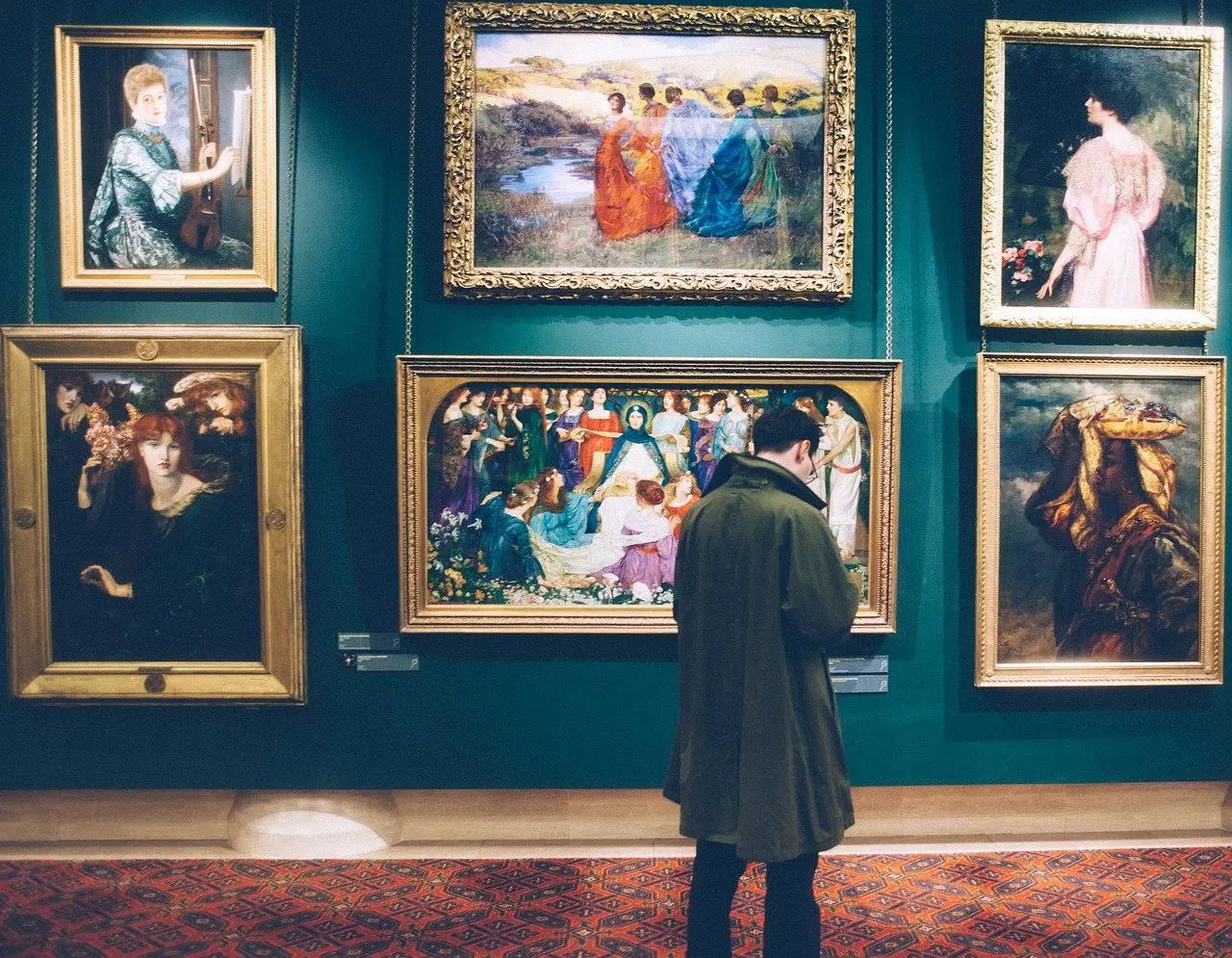
An art collection is a set of works that an institution or a private body acquires, keeps and shows according to a policy. The scale varies widely: GAM in Turin has a permanent collection of over 20,000 works, which Piemonte Italia Guida calls the most important in Italy.
Works, archive and projects
A collection is not only objects. Fondazione Merz is described as housing works, archive and projects, which shows three distinct holdings. The archive explains the works, and the projects show intention beyond finished objects. A strong collection records how and why a piece was made, not only what it looks like.
Choosing what to look for
Two questions help when reading about any collection. First, what is its focus: breadth, as at a large public museum, or depth in one artist, as at an artist’s foundation? Second, how does it show its holdings: through rotating exhibitions, seminars and conferences, or archive access? The Sandretto Re Rebaudengo example shows a private collection kept active through programmes.
Care also has an environmental side. Moving and displaying works consumes resources, a subject taken up in carbon footprint of art museums. Readers who want the maker-side equivalent can compare it with sustainable art practices.
Public space and outdoor work
Public art puts contemporary work in front of people who have not chosen to visit an art venue. That matters for environmental themes because the audience that most needs to engage is not always the audience that goes to galleries.
The Artecittà project is an Italian example: installations integrated into urban space, supported by Fondazione CRT, as described in Piemonte Italia Guida. Work in the street changes how it is read. Passers-by meet it in the course of a normal day, so the piece must communicate without wall labels or a ticketed context.
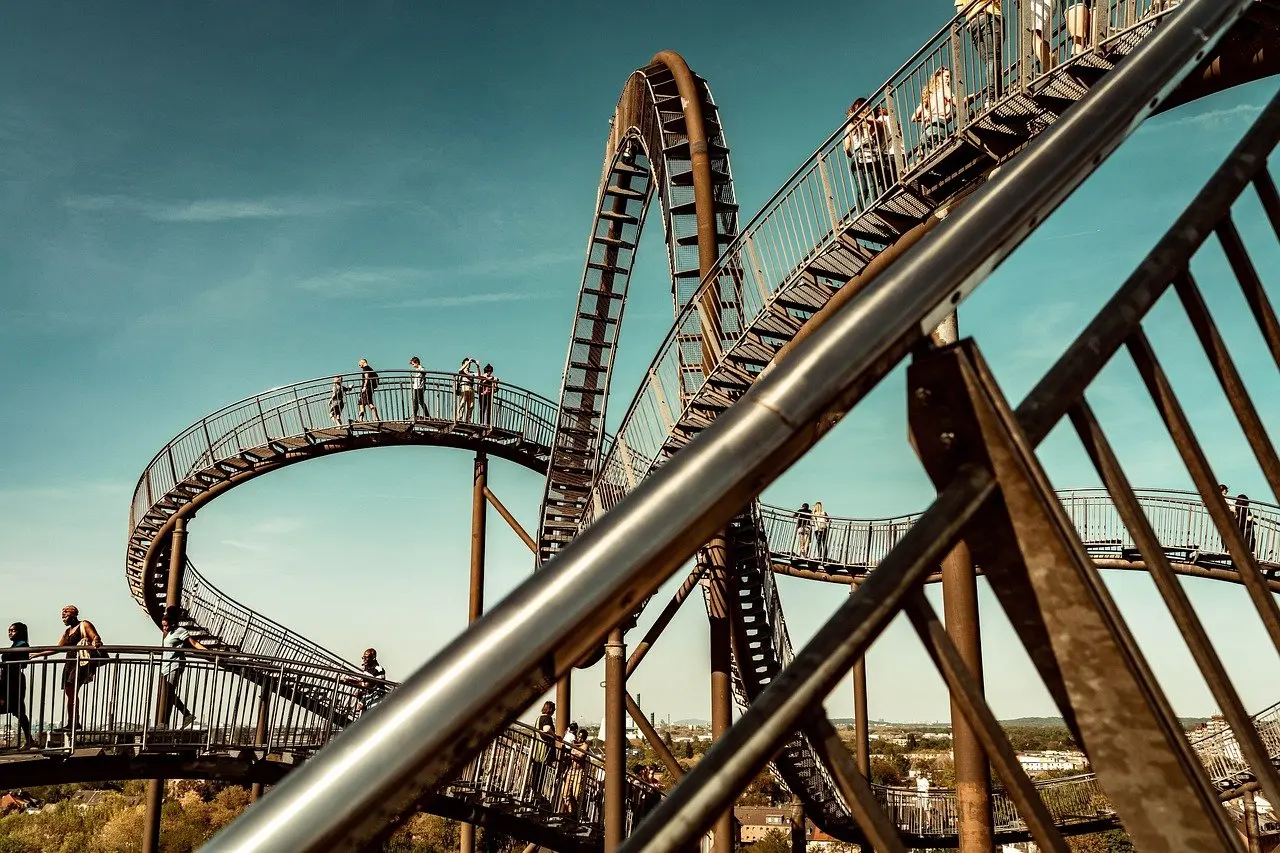
For how outdoor work shapes attention to ecology, see public art environmental awareness. For physical works placed in landscapes and squares, contemporary outdoor sculpture is the companion read. The practical judgement is that outdoor work suits readers who want free, casual encounters, while indoor exhibitions suit readers who want sustained, guided engagement.
Reading and visiting an environmental work
A visit goes better with a few habits. These are judgements for choosing and reading work, not claims about any one venue.
- Check the format first. A themed exhibition, a fair and a museum collection serve different goals. The Rome show and Artissima are not interchangeable.
- Identify the approach. Is the work about a problem, made from its materials, or staged to reduce its own footprint? That tells you what to look for.
- Read the stated aim. The Rome exhibition’s aim was reflection on the planet’s future and a new relationship between people and nature. An aim like that shows how a show wants to be judged.
- Look at who backs it. A sponsor, a private foundation or an artist’s foundation each signals a different kind of programme.
- Confirm dates with the organiser before travelling.
Readers who want to go deeper can choose a route from the start of this guide. Those who prefer science-led work should read what is bio art, and those who prefer the long view should read ecological art history.
Frequently asked questions
| Question | Answer |
|---|---|
| Where is the densest cluster of contemporary art in the evidence reviewed? | Turin and Piedmont. The regional guide names Castello di Rivoli, GAM, Artissima and several foundations there. |
| Was Ghê Gaia Terra a permanent display? | No. It ran at the Museum of the Walls in Rome from 22 April to 22 May 2022, so it is a model of format rather than a current visit. |
| Is Artissima the same kind of event as a biennale? | No. It is described as a market exhibition of contemporary art in Turin’s Lingotto, so it centres on galleries and sales instead of a curated survey. |
| What does a tardigrade have to do with the Rome exhibition? | The exhibition uses it as a symbol of resilience, because tardigrades can survive up to thirty years without food or water. |
| Is the Florence sacred art exhibit an environmental show? | No. It is an international exhibit of contemporary sacred art, useful here as an example of an organiser sponsoring portions of a show. |